Last Update
Dec. 1, 2020
Organisation
Unknown
Gender
Male
Ethnic Group
Unknown
Religoius Group
Shia
Province
Tehran
Occupation
Journalist
Sentence
3 years imprisonment
Status
Released
Institution investigating
Ministry of Intelligence
Charges
Conspiring against national security
Propaganda against the regime
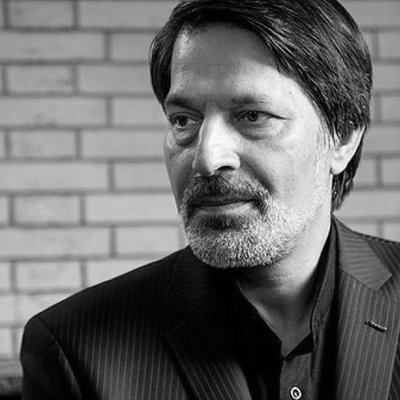
Emadoldin Baghi Released
Emadoldin Baghi is a journalist and human rights activist. He is the president and founder of the Committee for the Defense of Prisoners' Rights, and the author of the textbook Contemporary History of Iranian High Schools, which was published in the late 1990s.
Emadoldin Baghi was studying Arabic literature, logic, and other theological courses at the seminary in Shush, when the 1979 Islamic Revolution came to Iran. From 1982 until 1991, Baghi continued his theological studies in Qom, where he studied Islamic jurisprudence and subjects outside of traditional jurisprudence under the tuition of Ayatollah Hussein-Ali Montazeri, a prestigious Shia religious authority and the Revolution's founder Ayatollah Ruhollah Khomeini's intended successor as Supreme Leader of Iran until the two had a political falling-out.
Baghi was a political activist and revolutionary in the years leading up to the Islamic Revolution. He was also a member of the Islamic Revolutionary Guards Corps (IRGC) political bureau for more than two years in its early days. He resigned from this position in 1983 and, from the early 1990s, he gradually became critical of his previous political ideology and his part in the Revolution.
Media Activity
In 1983, Baghi started his career in journalism by working with the Kayhan and Ettela'at newspapers. In 1991, he began working with the Salam and Hamshahri newspapers where he continued to work for eight years. During this period Baghi also contributed to a number of newspapers that sprung up as part of the reformist movement that flourished during Mohammad Khatami’s first presidential term from 1997 to 2001. Reforms to press freedom laws saw many newspapers launched during this period.
The period between 1999 and 2001 became known as the "Media Spring," due to the flourishing of reformist journalism and publications, and Emadoldin Baghi gained prominence for writing in reformist newspapers on a variety of subjects including the notorious Chain Murders in Iran, a series of murders carried out between 1988 and 1998 by the Iranian government against critics of the Islamic Republic, the Islamic practice of qisas, a form of punishment for murder in Islamic jurisprudence which gives the victim’s kin the right to take the murderer’s life or demand blood money as retribution for the crime, and the death penalty in Iran.
In his first article about the Chain Murders, which was published in Khordad, Emadoldin Baghi wrote: “Although the kidnappings and killings in the past two weeks are not a new phenomenon, and although there have previously been numerous cases which have gone unnoticed, these recent cases [of kidnapping and murder] have been different [from those that have come before] as the are clearly taking place to oppose the realization of civil society and freedoms that are enshrined in law and to undermine Seyyed Mohammad Khatami’s political development project. The officers and commanders [that order these acts] should know that never has any murder, especially that of a political nature, been kept secret. The history of crimes like these has shown that the perpetrators of such murders and those who give the orders to commit them will eventually perish at the hands of their allies and supporters for keeping or burying these secrets, if they are not brought to justice before that.”
During the eight years of reform under Khatami, from 1997 to 2005, Baghi published 28 books and hundreds of articles in a variety of newspapers including as Toos, Jame'e, Fatah, Sobh-e Emrooz, Joumhouriat and Shargh. These newspapers were all eventually banned.
On March 26, 2000, Emadoldin Baghi was summoned to court for his writings. His trial took place without a jury. The plaintiffs in Baghi’s legal case were the Ministry of Intelligence, the Islamic Revolutionary Guards Corps, the Islamic Republic of Iran Broadcasting Network, the Law Enforcement Force of the Islamic Republic of Iran, Ali Fallahian, the former Minister of Intelligence, Mostafa Pourmohammadi, the Deputy Minister of Intelligence, Delam Kamal Soltani, another deputy of Ali Fallahian, Khatib, the Director General of Intelligence in Qom during Ali Fallahian’s time as Minister of Intelligence, Firouz Aslani, the lawyer for the Kayhan newspaper, the main conservative and state-affiliated newspaper in Iran, and Abdolhamid Mohtasham, the editor-in-chief of the Yalasarat newspaper, the official newspaper and media outlet for Ansar-e Hezbollah, a conservative paramilitary organisation in Iran.
The investigations in Baghi’s case began in March 2000, were carried out by Saeed Mortazavi, a judge from Branch 1410 of the Judicial Complex of Government Employees, and were presided over by Mohseni Ejei. Baghi’s trial took place in April and he was eventually sentenced over the course of seven sessions.
Time in Prison
Emadoldin Baghi was initially sentenced to seven and a half years imprisonment by Saeed Mortazavi of which four years was for the publication of his article “Execution and Qisas,” three years imprisonment was for his articles on the Chain Murders, and six months was for insulting the Guardian Council. This sentence was later reduced to three years imprisonment by the Court of Appeals.
Baghi was arrested before the Court of Appeals’ final verdict was announced on June 6, 2000, and he was eventually released from prison on February 6, 2003.
Shortly after his release from prison, Baghi formed the Society for the Defense of Prisoners' Rights and was elected chairman of the association by the board at the organization’s first meeting.
This group is a non-governmental, non-political association that provides cultural, practical and legal services to prisoners. It is the first non-governmental organization to support prisoners in Iran.
After this, Baghi strove to advocate for prisoners, both political and non-political, and worked to overturn death sentences for those that were on death row.
In August 2007, Baghi was again sentenced by Branch 6 of the Revolutionary Courts of Tehran to three years imprisonment on charges of "gathering and colluding against national security" and "propaganda against the state for the benefit of foreign and anti-regime groups."
Emadoldin Baghi's lawyer, Mahmoud Alam, spoke to the media at the time, stating his client had been charged based on interviews he had given to media outlets, for writing letters to and interviewing prisoners, several of whom had been sentenced to death for alleged involvement in the unrest in Ahwaz.
Baghi is one of the few political activists inside Iran who opposes the death penalty. He has written numerous articles on the subject. Over the years, The Society for the Defense of Prisoners' Rights has issued statements and open letters about the conditions in prisons and the situation of prisoners in Iran. The organization has also written critiques and exposées addressed to officials of the Prisons Organization of Iran.
In 2009, following the widespread arrests that took place after the Green Movement protests against the contested reelection of then president Mahmoud Ahmadinejad, and following the banning and closure of several political parties and associations, the Society for the Defense of Prisoners' Rights was also closed. But its members continued to work informally to help prisoners and lawyers. Baghi also remained involved.
Emadoldin Baghi later won several international press freedom and journalism awards, including the Foreign Reporter of the Year from the British Press Awards, the Northcote Parkinson Fund's Civil Courage Award, the Human Rights Prize of the French Republic from the National Commission on Human Rights of France, and the Martin Ennals Award for Human Rights Defenders.