Last Update
May 10, 2020
Organisation
Unknown
Gender
Male
Ethnic Group
Unknown
Religoius Group
Muslim
Province
Tehran
Occupation
Journalist
Sentence
Unknown
Status
Awaiting trial
Institution investigating
Unknown
Charges
Dissemination of False Information
Insulting Iranian officials
Date of Birth
12/6/1959
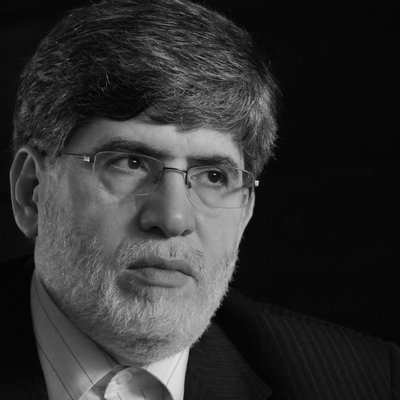
Ali Akbar Javanfekr Awaiting trial
Ali Akbar Javanfekr is the former managing director of the Islamic Republic News Agency (IRNA) and the director of the Iranian Press Institute. He was also Mahmoud Ahmadinejad's media adviser throughout his presidency.
Special publication of the Khatun journal and clashes between the judicial authorities and the editorial board of the Iran newspaper
In August 2011, the Iran newspaper, which is owned and published by IRNA, published a 258 page special issue called Khatun. This special issue contained a controversial article which discussed the practice of wearing the chador in Iran. Following the publication, the Attorney General of Tehran accused Javanfekr of “publishing content that was contrary to Islamic principles” and “publishing pictures that were against public standards of decency.” Javanfekr’s court case was heard in Branch 76 of the Criminal Courts of Tehran and he was sentenced to six months imprisonment and a three years ban on media activity for each of the accusations: 12 months in total and six years ban.
In an interview with the Etemad newspaper on November 20, 2011, Javanfekr defended the publication of Khatun and strongly criticized the judiciary’s conduct. One day after this interview, agents from the Tehran Prosecutor's Office went to the Iran newspaper offices in order to arrest Javanfekr, but resistance from the newspaper's editorial staff led to violent clashes between the staff and judicial officials.
Javanfekr wrote about the clashes between the judicial officers and members of the editorial board of the Iran newspaper on his Telegram channel saying, “Agents from the Prosecutor’s Office entered the studio in the middle of a news broadcast. I sat them down in my office and they listened to my protests after which they requested that I accompany them to the Prosecutor’s Office. However, they wouldn’t give me a reason for these summons and they didn’t have an arrest warrant. Their aggressive and illegal behaviour made a number of my colleagues concerned about me and they gathered in front of my office to see if I was alright. The agents from the Prosecutor’s Office called police officers to intervene, which resulted in the destruction of the property and facilities of the Iranian Culture and Press Institute, and the arrest of the managing director and dozens of other editors and journalists.”
On February 29, 2012, the verdict of the lower court’s sentence was completely upheld in Branch 36 of the Court of Appeals of Tehran province.
Following the confirmation of this sentence in the Supreme Court on September 26, 2012, Javanfekr was arrested and transferred to prison to serve his one-year sentence. He was released from prison in March 2014 after serving a year and a half in prison.
On December 28, 2014, following a legal complaint from the Prosecutor’s Office of Tehran, the trial of Javanfekr and three former reporters from the Iran newspaper was heard in Branch 1057 of the Employees’ Court. They were accused of “disobeying judicial and law enforcement officers” in connection to the clashes that took place at the Iran newspaper’s offices in 2011.
Despite his objections to the indictment, Javanfekr’s case continued to be investigated and over the course of two court sessions, in January 2016 and June 2016, Javanfekr was sentenced to 91 days imprisonment.
Javanfekr was informed of the court’s verdict on June 19, 2016. He subsequently protested against the judgement and after a delay of two years, on November 4, 2018, the sentence was upheld and finalized in the Court of Appeals. This sentence has not yet been enforced.
Comments on the special publication of Khatun
In August 2011, when Iran newspaper published Khatun, it provoked strong reactions from members of parliament, government officials, leading Islamic religious authorities and the media. Critics believed that the article questioned the religious practice of wearing the “black chador” or Islamic hijab.
In the special publication, there was an interview with Mehdi Kalhor, Mahmoud Ahmadinejad’s media advisor, in which he stated that the black chador was an imitation of the black clothes of western men and women at debauched European parties from the time of Naser Al-Din Shah. In the article, Kalhor was quoted as saying, “In terms of the philosophy behind the hijab, it is stated in the Quran that a woman should put herself in men’s gaze. In this respect, the black chador is definitely the worst clothing, as it frames a woman’s face.”
In response to the publication of the special issue of Khatun, the Prosecutor’s Office of Tehran announced that it would take legal action against those involved. The statement issued by the Prosecutor’s Office read, “In August 2011, the Iran newspaper published an issue entitled Khatun 1 in which there was an article concerning the hijab and the beliefs of Iranian Muslim women. By attacking the chador, hijab and the principle of Islamic chastity and by promoting immorality in regards to Islamic dress, the published article offends both public modesty and morality.”
The article in the special issue also prompted a series of strong reactions from prominent Iranian figures including Mostafa Pourmohammadi, Mohammad Reza Bahonar, Gholam Hossein Mohseni Ejei, Abbas Jafari Dolatabadi, Makarem Shirazi and Haeri Shirazi as well as several other notable newspapers and news sites.
Ali Akbar Javandekr later responded to the reactions against the article in Khatun special publication in an interview with the Etemad newspaper, in which he said, “There was a wave of lies and misinformation throughout Iran. They published false and provocative information about the article and they forced a number of scholars and political activists to take a stand against it. In less than eight hours, we were formally accused of committing crimes.” Police and security officers subsequently raided the newspaper’s office and detained members of the editorial board as a result of these accusations.
Online Criticism of judicial officials and one-day arrest
On November 14, 2017, Ali Akbar Javanfekr was summoned to Branch 4 of the Culture and Media Prosecutor's Office in relation to articles that he had published online in which he criticized the actions of judicial officials. He ignored the summons and did not go to the Prosecutor’s Office.
Shortly afterwards, on December 22, 2017, the head judge of Branch 1058 of the Criminal Courts of Government Employees sentenced Javanfekr to six months imprisonment on the accusation of “insulting the Attorney General of Tehran” and 4.5 million tomans in fines on the accusation of “spreading lies with the intention of disturbing the public opinion.”
On August 19, 2018, security officers arrested Javanfekr but released him a few hours later. Mehran Abdullahpour, Javanfekr's lawyer, told IRNA, “My client was arrested this morning by the authorities in relation to a fine on the charge of ‘spreading lies’ from two or three years ago. In this case, Javanfekr was ordered by the court to pay a fine of 4.5 million tomans, but as he was unable to pay the fine, he requested to be declared insolvent which was accepted by the courts. However, when his friends and acquaintances paid the requested fine, Javanfekr was released only minutes before he was due to be officially arrested.”
The burning of Hamid Baghaei's court sentence in front of the British Embassy
On September 1, 2018, Javanfekr was summoned to a joint trial with Esfandiar Rahim Mashaei. The pair had previously set fire to a copy of Baghaei's sentence in a symbolic act of defiance. Baghaei was the Vice-President under Mahmoud Ahmadinejad, from 2011-2014, who was convicted of corruption charges and sentenced to prison for 15 years in front of the British Embassy. Javanfekr did not appear in court following the summons.
On September 12, 2018, Branch 1 of the Islamic Revolutionary Courts of Tehran sentenced Ali Akbar Javanfekr in absentia to five years and one month imprisonment on the accusation of “gathering and colluding against national security.” On February 5, 2019, the same court requested that Javanfekr’s appeal against the verdict be rejected and his conviction upheld due to his absence in court.
This verdict can be appealed in the Courts of Appeals of Tehran province.
Online activities and two new legal cases against Javanfekr
On September 22, 2018, Mehran Abdullahpour, Ali Akbar Javanfekr's lawyer, spoke about a new legal case against his client in an interview with IRNA. Adbullahpour announced that Branch 1060 of the Court for Government Employees had sentenced his client to two and a half years imprisonment, a monetary fine of four million tomans and a two-year ban on online activities on the accusations of “insulting state officials” and “spreading lies by writing content for Telegram channels.” This verdict, which was issued in absentia, was appealed by Javanfekr but later upheld in the same branch of court on November 12, 2018.
Later, in December 2018, Branch 2 of the Culture and Media Prosecutor's Office issued a warrant for Javanfekr in relation to a new case opened against him on the accusation of “spreading lies.” This case was subsequently referred to court for prosecution.
Mehran Abdullahpour, Javanfekr's lawyer, spoke about the case to IRNA saying, “This legal case has been formed following the publication of an article by my client on Telegram in which he called on the National Inspection Agency to investigate reports of abuses by judicial officials.”
Both of these legal cases against Ali Akbar Javanfekr are ongoing and awaiting judgements from the Iranian judicial authorities.